Sokar Uthne Ki Dua in Arabic, Hindi, Urdu & English | Dua After Waking Up
Sokar uthne ki dua is the supplication the Prophet ﷺ recited every morning on waking up: “Alhamdu lillahil-lazi ahyana ba’da ma amatana wa ilayhin-nushur”. On this page you can read sokar uthne ki dua (subah uthne ki dua) in Arabic, Roman English, Hindi and Urdu with translation, the second dua of waking from Tirmidhi, the dua for waking at night, and the Sunnah acts after waking.
Sokar Uthne Ki Dua in Arabic
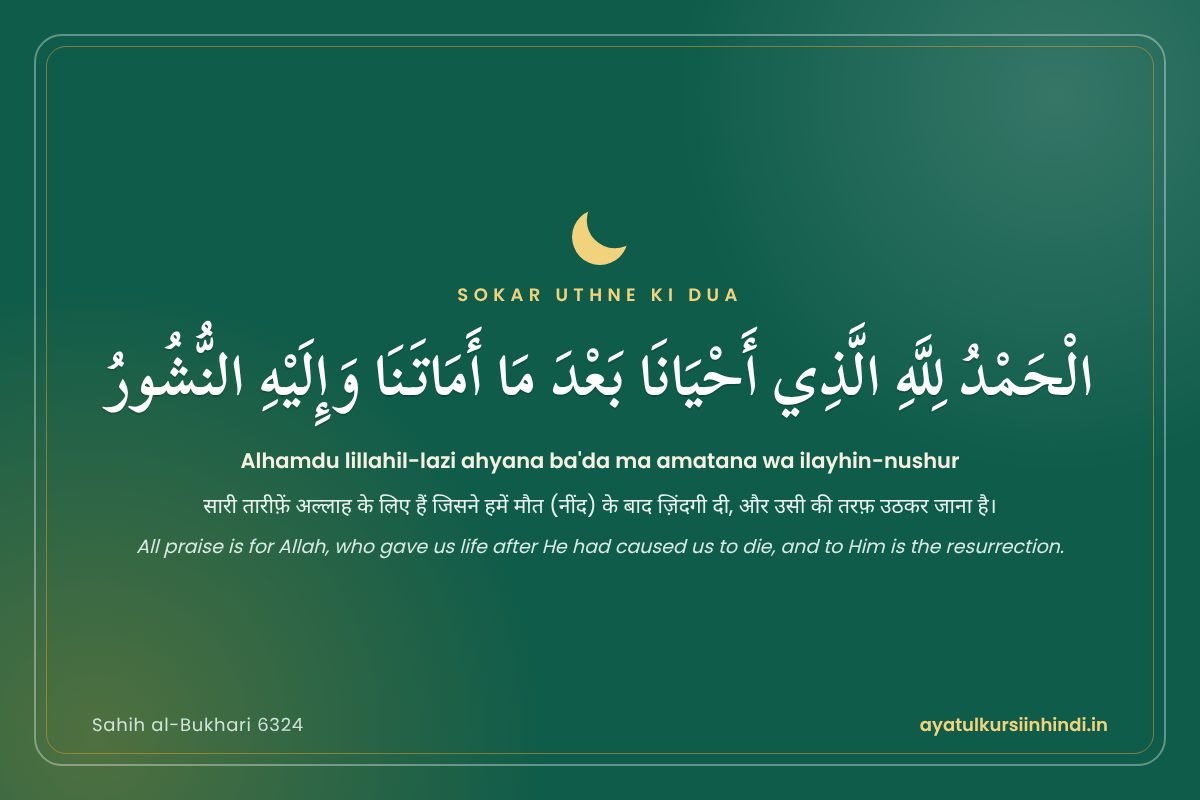
الْحَمْدُ لِلَّهِ الَّذِي أَحْيَانَا بَعْدَ مَا أَمَاتَنَا وَإِلَيْهِ النُّشُورُ
Sahih al-Bukhari: 6324; Sahih Muslim: 2711
Sokar Uthne Ki Dua in English (Roman)
Alhamdu lillahil-lazi ahyana ba’da ma amatana wa ilayhin-nushur.
Sokar Uthne Ki Dua Translation in English
All praise is for Allah, who gave us life after He had caused us to die, and to Him is the resurrection.
Sokar Uthne Ki Dua in Hindi – सोकर उठने की दुआ हिंदी में
अल्हम्दु लिल्लाहिल्लज़ी अह्याना बअ्दा मा अमातना व इलैहिन्नुशूर।
हिंदी तर्जुमा: सारी तारीफ़ें अल्लाह के लिए हैं जिसने हमें मौत (नींद) के बाद ज़िंदगी दी, और उसी की तरफ़ उठकर जाना है।
Sokar Uthne Ki Dua in Urdu – سو کر اٹھنے کی دعا
تمام تعریفیں اللہ کے لیے ہیں جس نے ہمیں مارنے (سلانے) کے بعد زندہ کیا، اور اسی کی طرف اٹھ کر جانا ہے۔
Sokar Uthne Ki Dua Image
Sokar Uthne Ki Dua in Hadith
Hudhayfah (may Allah be pleased with him) reported that when the Prophet ﷺ went to bed he would say, “Allahumma bismika amutu wa ahya”, and when he woke up he would say, “Alhamdu lillahil-lazi ahyana ba’da ma amatana wa ilayhin-nushur.” (Sahih al-Bukhari: 6324)
Sleep is called a lesser death in the Quran: Allah takes the souls at death, and the souls of those who have not died during their sleep; He keeps those for whom He has decreed death and sends the others back until an appointed time. (Surah Az-Zumar, 39:42) So waking up is a small resurrection, and the dua thanks Allah for returning the soul and reminds us of the real resurrection.
Second Dua After Waking Up (Tirmidhi)
الْحَمْدُ لِلَّهِ الَّذِي عَافَانِي فِي جَسَدِي، وَرَدَّ عَلَيَّ رُوحِي، وَأَذِنَ لِي بِذِكْرِهِ
Roman English: Alhamdu lillahil-lazi ‘afani fi jasadi, wa radda ‘alayya ruhi, wa azina li bizikrih.
हिंदी: अल्हम्दु लिल्लाहिल्लज़ी आफ़ानी फ़ी जसदी, व रद्दा अलय्या रूही, व अज़िना ली बिज़िक्रिह। (सारी तारीफ़ अल्लाह के लिए जिसने मेरे बदन को आफ़ियत दी, मेरी रूह मुझे लौटा दी, और मुझे अपने ज़िक्र की इजाज़त दी।)
تمام تعریفیں اللہ کے لیے ہیں جس نے میرے بدن کو عافیت دی، میری روح مجھے لوٹا دی، اور مجھے اپنے ذکر کی اجازت دی۔
Translation: All praise is for Allah, who gave health to my body, returned my soul to me, and allowed me to remember Him. (Jami at-Tirmidhi: 3401)
Dua When Waking Up at Night (Raat Ko Aankh Khulne Ki Dua)
Ubadah ibn as-Samit (may Allah be pleased with him) reported that the Prophet ﷺ said: whoever wakes at night and says this, then says “Allahummaghfir li” or makes any dua, it is answered, and if he makes wudu and prays, his prayer is accepted:
لَا إِلَٰهَ إِلَّا اللَّهُ وَحْدَهُ لَا شَرِيكَ لَهُ، لَهُ الْمُلْكُ وَلَهُ الْحَمْدُ، وَهُوَ عَلَىٰ كُلِّ شَيْءٍ قَدِيرٌ، الْحَمْدُ لِلَّهِ، وَسُبْحَانَ اللَّهِ، وَلَا إِلَٰهَ إِلَّا اللَّهُ، وَاللَّهُ أَكْبَرُ، وَلَا حَوْلَ وَلَا قُوَّةَ إِلَّا بِاللَّهِ
Roman English: La ilaha illallahu wahdahu la sharika lah, lahul-mulku wa lahul-hamd, wa huwa ‘ala kulli shay’in qadir. Alhamdu lillah, wa subhanallah, wa la ilaha illallah, wallahu akbar, wa la hawla wa la quwwata illa billah.
Translation: There is no god but Allah alone, without partner. His is the kingdom and His is the praise, and He has power over all things. Praise be to Allah, glory be to Allah, there is no god but Allah, Allah is the Greatest, and there is no power and no strength except with Allah. (Sahih al-Bukhari: 1154)
Sunnah Acts After Waking Up (Uthne Ke Baad Ki Sunnatein)
- Recite sokar uthne ki dua as soon as you are awake.
- Wipe the sleep from your face with your hands, as the Prophet ﷺ did. (Sahih al-Bukhari: 183)
- Recite the last ten verses of Surah Aal Imran (3:190-200), which the Prophet ﷺ recited on waking at night. (Sahih al-Bukhari: 183)
- Use the miswak. The Prophet ﷺ cleaned his mouth with the miswak when he woke. (Sahih al-Bukhari: 245)
- Wash the hands three times before putting them in a water vessel, because you do not know where your hand rested during sleep. (Sahih al-Bukhari: 162)
- Rinse the nose three times, because Shaytan spends the night in the upper nose. (Sahih al-Bukhari: 3295)
- Make wudu and pray Fajr on time; the Prophet ﷺ said Shaytan ties three knots on the sleeper, which are loosened by dhikr, wudu and prayer. (Sahih al-Bukhari: 1142)
- Recite the morning adhkar after Fajr: Ayatul Kursi, the three Quls, and the morning duas.
Frequently Asked Questions
“Alhamdu lillahil-lazi ahyana ba’da ma amatana wa ilayhin-nushur”, meaning: all praise is for Allah who gave us life after death, and to Him is the resurrection. It is in Sahih al-Bukhari 6324.
Sone ki dua, “Allahumma bismika amutu wa ahya”, is said when lying down to sleep. Sokar uthne ki dua is said on waking. Both are in the same hadith of Hudhayfah.
As soon as you wake, while still in bed, before speaking to anyone. Then wipe your face, use the miswak and make wudu.
Yes. The hadith mentions waking in general, and it is a remembrance of Allah, so it may be said after any sleep.
Use the Hindi and Roman text to learn the Arabic, and read the translation to understand it. The Arabic is short and easy to memorise.