
Nazar Ki Dua in Arabic, English, Hindi & Urdu | Evil Eye Protection
Nazar ki dua is the supplication recited for protection from the evil eye (nazar e bad, buri nazar). The Prophet ﷺ said that the evil eye is real, and he taught specific words to recite over a person, especially a child, to protect them from it. On this page you can read nazar ki dua in Arabic, Roman English, Hindi and Urdu with translation, the ruqyah for removing nazar, the Quranic verses recited for it, and the Sunnah way of protecting yourself and your family.
Nazar Ki Dua in Arabic
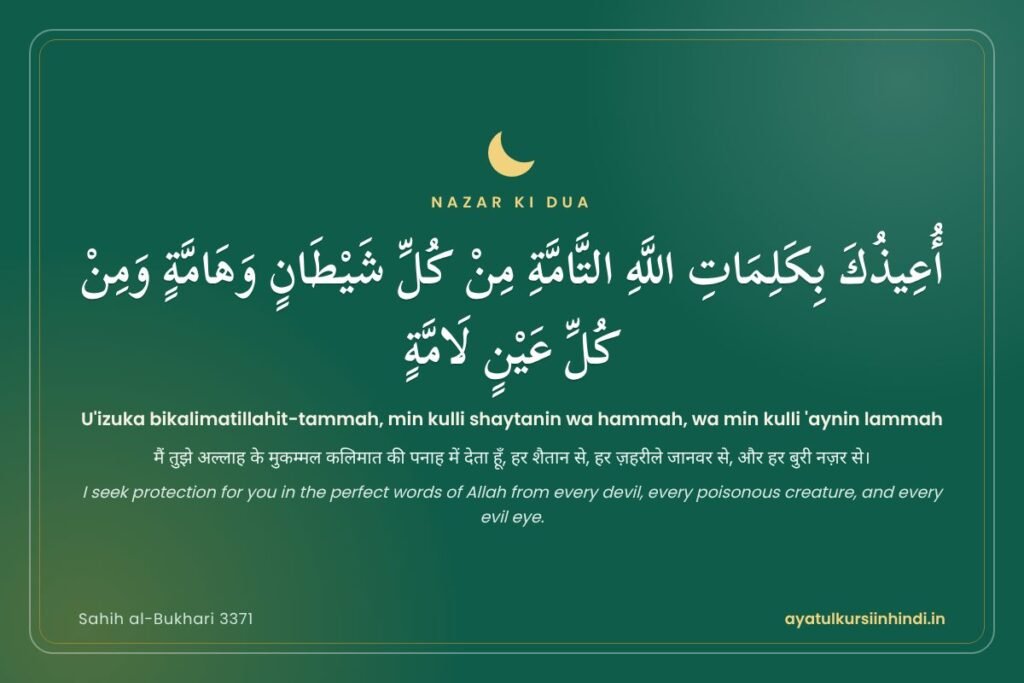
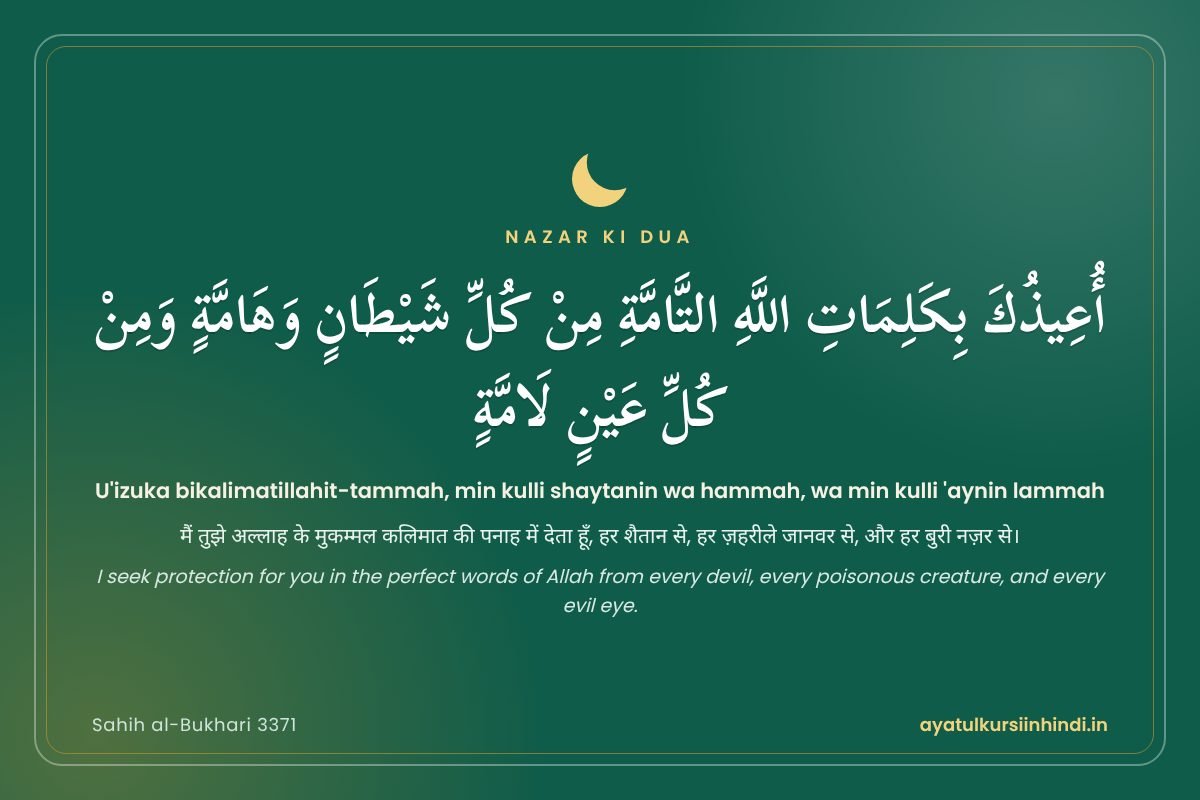
أُعِيذُكَ بِكَلِمَاتِ اللَّهِ التَّامَّةِ مِنْ كُلِّ شَيْطَانٍ وَهَامَّةٍ وَمِنْ كُلِّ عَيْنٍ لَامَّةٍ
Sahih al-Bukhari: 3371
Nazar Ki Dua in English (Roman)
U’izuka bikalimatillahit-tammah, min kulli shaytanin wa hammah, wa min kulli ‘aynin lammah.
Nazar Ki Dua Translation in English
I seek protection for you in the perfect words of Allah, from every devil and every poisonous creature, and from every evil eye.
Nazar Ki Dua in Hindi – नज़र की दुआ हिंदी में
उईज़ुका बिकलिमातिल्लाहित्ताम्मह, मिन कुल्लि शैतानिंव व हाम्मह, व मिन कुल्लि ऐनिन लाम्मह।
हिंदी तर्जुमा: मैं तुझे अल्लाह के मुकम्मल कलिमात की पनाह में देता हूँ, हर शैतान से, हर ज़हरीले जानवर से, और हर बुरी नज़र से।
Nazar Ki Dua in Urdu – نظر کی دعا
میں تجھے اللہ کے مکمل کلمات کی پناہ میں دیتا ہوں، ہر شیطان سے، ہر زہریلے جانور سے، اور ہر بری نظر سے۔
For a girl say u’izuki, for two children u’izukuma, and for yourself a’uzu (I seek refuge) in place of u’izuka.
Nazar Ki Dua Image
Nazar Ki Dua in Hadith
Ibn Abbas (may Allah be pleased with him) reported that the Prophet ﷺ used to seek protection for Hasan and Husain with these words, and he said: your father Ibrahim used to seek protection with them for Ismail and Ishaq. (Sahih al-Bukhari: 3371)
The Prophet ﷺ also said: the evil eye is real, and if anything could overtake destiny, the evil eye would. (Sahih Muslim: 2188) So nazar is not superstition; it is a real harm, and its treatment is dua, ruqyah and reliance on Allah, not amulets or charms.
Nazar Utarne Ki Dua (Ruqyah to Remove the Evil Eye)
When Jibril (alayhis salam) came to the Prophet ﷺ while he was ill, he recited this ruqyah over him. It is recited over a person already affected by nazar or illness:
بِسْمِ اللَّهِ أَرْقِيكَ، مِنْ كُلِّ شَيْءٍ يُؤْذِيكَ، مِنْ شَرِّ كُلِّ نَفْسٍ أَوْ عَيْنِ حَاسِدٍ، اللَّهُ يَشْفِيكَ، بِسْمِ اللَّهِ أَرْقِيكَ
Sahih Muslim: 2186
Roman English: Bismillahi arqik, min kulli shay’in yu’zik, min sharri kulli nafsin aw ‘ayni hasid, Allahu yashfik, bismillahi arqik.
हिंदी: बिस्मिल्लाहि अरक़ीक, मिन कुल्लि शैइंय युअ्ज़ीक, मिन शर्रि कुल्लि नफ़्सिन औ ऐनि हासिद, अल्लाहु यश्फ़ीक, बिस्मिल्लाहि अरक़ीक।
हिंदी तर्जुमा: अल्लाह के नाम से मैं तुझ पर दम करता हूँ, हर उस चीज़ से जो तुझे तकलीफ़ दे, हर जान और हसद करने वाली नज़र के शर से। अल्लाह तुझे शिफ़ा दे। अल्लाह के नाम से मैं तुझ पर दम करता हूँ।
اللہ کے نام سے میں تجھ پر دم کرتا ہوں، ہر اس چیز سے جو تجھے تکلیف دے، ہر جان اور حسد کرنے والی نظر کے شر سے۔ اللہ تجھے شفا دے۔ اللہ کے نام سے میں تجھ پر دم کرتا ہوں۔
Translation: In the name of Allah I recite over you, from everything that harms you, from the evil of every soul or envious eye. May Allah heal you. In the name of Allah I recite over you.
Quranic Verses for Nazar (Nazar Ki Ayat)
1. Surah Al-Falaq (113)
The Prophet ﷺ used to seek refuge from the evil eye with Al-Falaq and An-Nas, and when these two surahs were revealed he kept to them and left other words of protection. (Jami at-Tirmidhi: 2058) Its last verse asks protection “from the evil of the envier when he envies”, which is the root of nazar.
2. Surah An-Nas (114)
Recite it with Al-Falaq and Al-Ikhlas, blow into the hands and wipe over the body, three times. (Sahih al-Bukhari: 5017)
3. Surah Al-Qalam, verses 51-52
وَإِن يَكَادُ الَّذِينَ كَفَرُوا لَيُزْلِقُونَكَ بِأَبْصَارِهِمْ لَمَّا سَمِعُوا الذِّكْرَ وَيَقُولُونَ إِنَّهُ لَمَجْنُونٌ وَمَا هُوَ إِلَّا ذِكْرٌ لِّلْعَالَمِينَ
Roman English: Wa in yakadul-lazina kafaru layuzliqunaka bi absarihim lamma sami’uz-zikra wa yaquluna innahu lamajnun. Wa ma huwa illa zikrul lil-‘alamin.
Translation: And those who disbelieve almost make you slip with their eyes when they hear the Reminder, and they say, “He is surely mad.” But it is nothing but a Reminder to the worlds. (Surah Al-Qalam, 68:51-52)
These verses describe the harmful glance itself, so many scholars of tafsir mention them for protection from nazar. Reciting them is permissible, though no hadith fixes them for this purpose.
4. Ayatul Kursi
Recite Ayatul Kursi morning, evening and before sleeping. The hadith says that whoever recites it at night has a guardian from Allah until morning. (Sahih al-Bukhari: 2311)
Masha Allah: Dua When You Admire Something
Nazar often comes from admiration without remembering Allah. When you see something you like in your own child, home or anyone else, say:
مَا شَاءَ اللَّهُ لَا قُوَّةَ إِلَّا بِاللَّهِ
Roman English: Masha Allahu la quwwata illa billah.
Translation: What Allah wills; there is no power except with Allah. (Surah Al-Kahf, 18:39)
The Prophet ﷺ also said: when one of you sees something in himself, his wealth or his brother that pleases him, let him pray for blessing (barakah) for it, because the evil eye is real. (Musnad Ahmad; Sunan Ibn Majah: 3509) Saying Barakallahu fih (may Allah bless it) is the Sunnah when you admire something belonging to another.
Nazar Se Bachne Ka Tarika (How to Protect from Nazar)
- Morning and evening adhkar: Ayatul Kursi, Al-Ikhlas, Al-Falaq and An-Nas three times each, and “Bismillahil-lazi la yadurru ma’asmihi shay’un fil-ardi wa la fis-sama’i wa huwas-sami’ul-‘alim” three times. (Sunan Abu Dawud: 5088)
- For children: recite nazar ki dua “U’izuka bikalimatillah” over them every morning and night with your hand on their head.
- Say Masha Allah and pray for barakah whenever you admire anything.
- Do not show off blessings unnecessarily, especially on social media, as the companions were taught modesty in displaying wealth and children.
- If nazar has struck: recite the ruqyah above over the person, recite Al-Fatihah and the three Quls, blow on water and let them drink and wash with it. If the person who cast the eye is known, the Sunnah is to ask him to make wudu and pour that water over the affected person. (Sahih Muslim: 2188)
- Avoid amulets and black thread. The Prophet ﷺ said: whoever hangs an amulet has committed shirk. (Musnad Ahmad) Protection is in the words of Allah, not in objects.
Signs of Nazar (Nazar Lagne Ki Alamat)
There are no fixed signs in the hadith. People commonly describe sudden tiredness, loss of appetite, a child crying without reason, fever without cause, or a sudden downturn after praise. These can also be ordinary illness, so recite the ruqyah and see a doctor; the two do not conflict. Do not assume nazar for every problem, and do not blame a specific person without proof.
Frequently Asked Questions
It is “U’izuka bikalimatillahit-tammah min kulli shaytanin wa hammah wa min kulli ‘aynin lammah”, the dua the Prophet ﷺ recited over Hasan and Husain for protection from the evil eye, found in Sahih al-Bukhari.
Recite nazar ki dua and the ruqyah “Bismillahi arqik” over the baby, recite Al-Fatihah, Al-Ikhlas, Al-Falaq and An-Nas, blow gently, and wipe the baby with your right hand. Repeat morning and evening. Do not use black thread or amulets.
Surah Al-Falaq and Surah An-Nas are the surahs the Prophet ﷺ used for protection from the evil eye. Al-Qalam 51-52 and Ayatul Kursi are also recited.
Yes. The Prophet ﷺ said “the evil eye is real” (Sahih Muslim 2188). Its treatment is dua and ruqyah from the Quran and Sunnah.
Yes. Say “A’uzu bikalimatillahit-tammah min kulli shaytanin wa hammah wa min kulli ‘aynin lammah” (I seek refuge) for yourself, and recite the three Quls morning and evening.
Use the Hindi and Roman text to learn the Arabic words, and read the translation to understand them. Your own dua in any language is also accepted, but the words of the Quran and the Prophet ﷺ should be recited in Arabic.


